
Make Your Yard Visible and Safe After Dark
Landscape Lighting in Greenville for properties where key outdoor areas disappear once the sun sets
Landscape Legends LLC installs landscape lighting systems across Greenville and surrounding areas for homeowners who want to extend the usability of outdoor spaces into the evening and improve visibility along paths, stairs, and entry points. You may notice that your front walk becomes hard to navigate at night, that your patio feels uninviting after sunset, or that attractive landscaping features go completely unnoticed once daylight fades. Lighting changes that by highlighting specific areas, creating depth and contrast, and making it easier to move safely through your yard when it is dark outside.
This service includes design consultation to identify focal points and functional zones, selection of fixture types based on lighting goals, and installation of low-voltage wiring and transformers that power the system efficiently. Fixtures are placed to illuminate walkways, steps, trees, walls, and architectural features without creating glare or light spill into neighboring properties. Energy-efficient LED lamps are used for long bulb life and reduced power consumption, and each fixture is positioned and aimed during installation to ensure even coverage and visual balance. The result is a yard that remains visible, safe, and visually appealing after dark without flooding the area with harsh or excessive light.
If your outdoor spaces feel unusable or unsafe at night, reach out to discuss lighting design and installation in Greenville.
How Landscape Lighting Systems Are Installed
You start with a site walk to mark zones that need light, such as entry paths, patio edges, steps, retaining walls, or trees you want to accent. Low-voltage wire is trenched a few inches underground to protect it from mower blades and foot traffic, and fixtures are connected at intervals based on wattage and spacing requirements. A transformer regulates power and includes a timer or photocell so the system turns on automatically at dusk and off at a set time or dawn.
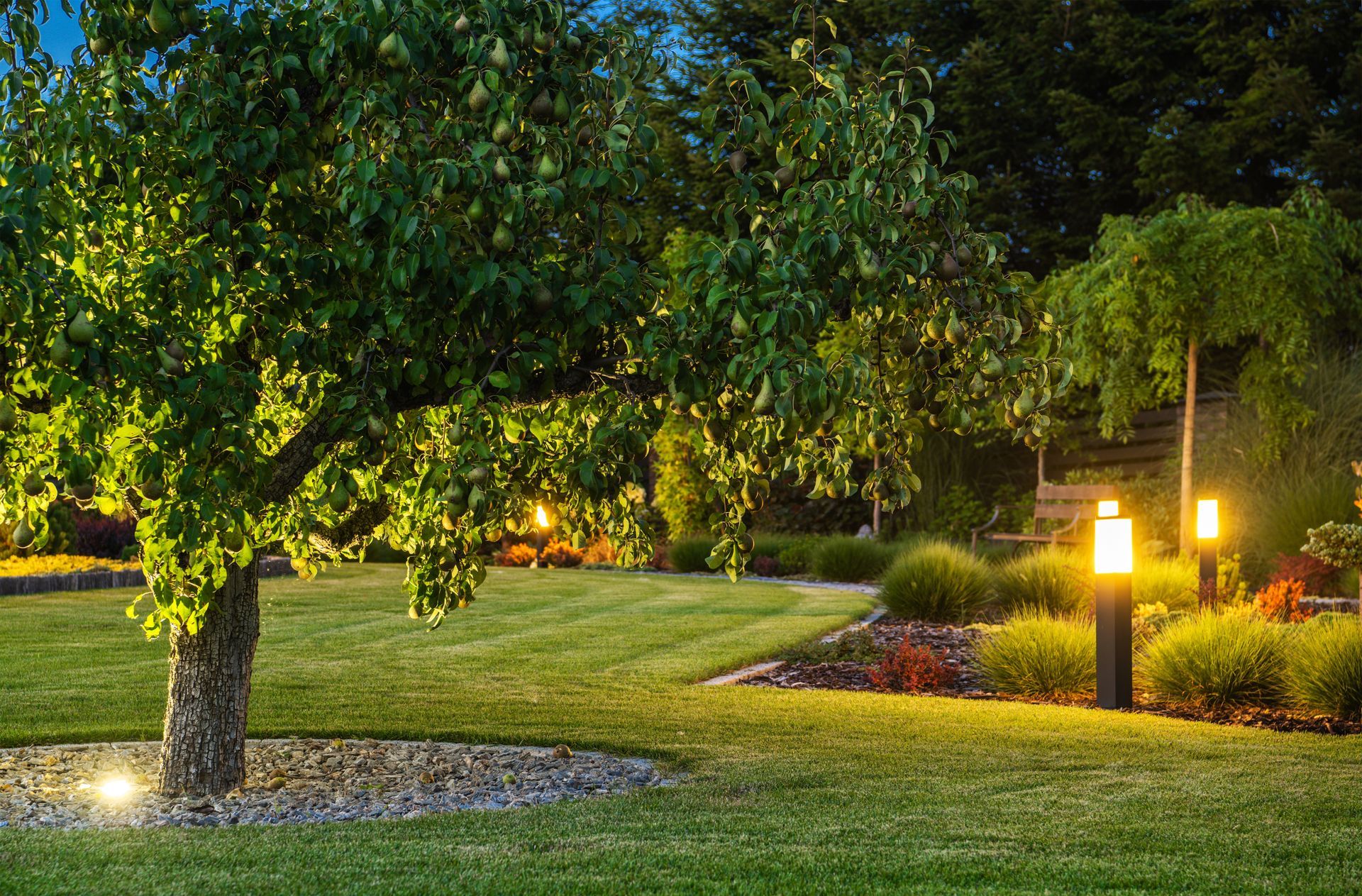
After the system is active, you will see pathways clearly defined by downlit or bollard fixtures, stairs marked with step lights that prevent missteps, and landscape features like stone walls or specimen trees highlighted with uplighting that adds dimension and visual interest. The lighting does not wash out the yard or create harsh shadows; instead, it layers light to guide movement and draw attention to elements you want noticed. Landscape Legends LLC adjusts fixture angles and lamp brightness during installation to avoid glare and ensure the system enhances your property rather than overwhelming it.
Systems installed without proper wire burial or voltage calculations often experience dim or flickering lights at the far end of the run. Fixtures must be rated for outdoor exposure and moisture, and transformers must be sized to handle the total wattage load without overheating. This is not decorative accent work; it is functional electrical installation that must perform reliably in all weather conditions.
Common Questions About Landscape Lighting
Homeowners in Greenville often want to know about energy use, fixture placement, and maintenance requirements before adding lighting to their property.
What is the difference between low-voltage and line-voltage landscape lighting?
Low-voltage systems run on twelve volts, use a transformer to step down household current, and are safer and easier to install, while line-voltage systems operate at one hundred twenty volts and require licensed electrical work and conduit burial.
How much does landscape lighting add to monthly electric costs?
LED systems typically add only a few dollars per month because bulbs draw minimal wattage and timers prevent lights from running during daylight hours or late into the night.
When should path lights be used versus spotlights?
Path lights sit low to the ground and spread light across walkways for safe navigation, while spotlights are aimed upward or outward to accent trees, walls, or architectural features with focused beams.
Why do some landscape lights stop working after a season or two?
Failure often results from moisture entering poorly sealed fixtures, corroded wire connections left exposed to soil and water, or transformers undersized for the system load in Greenville humidity and temperature swings.
What happens if a fixture needs adjustment or replacement later?
Low-voltage systems allow individual fixtures to be repositioned or swapped without rewiring the entire run, and most components are modular enough to replace quickly if damaged by equipment or weather.
If you want to make your yard safer and more inviting after dark, contact Landscape Legends LLC to review lighting options and plan a system that highlights key features and improves evening visibility across your property.