
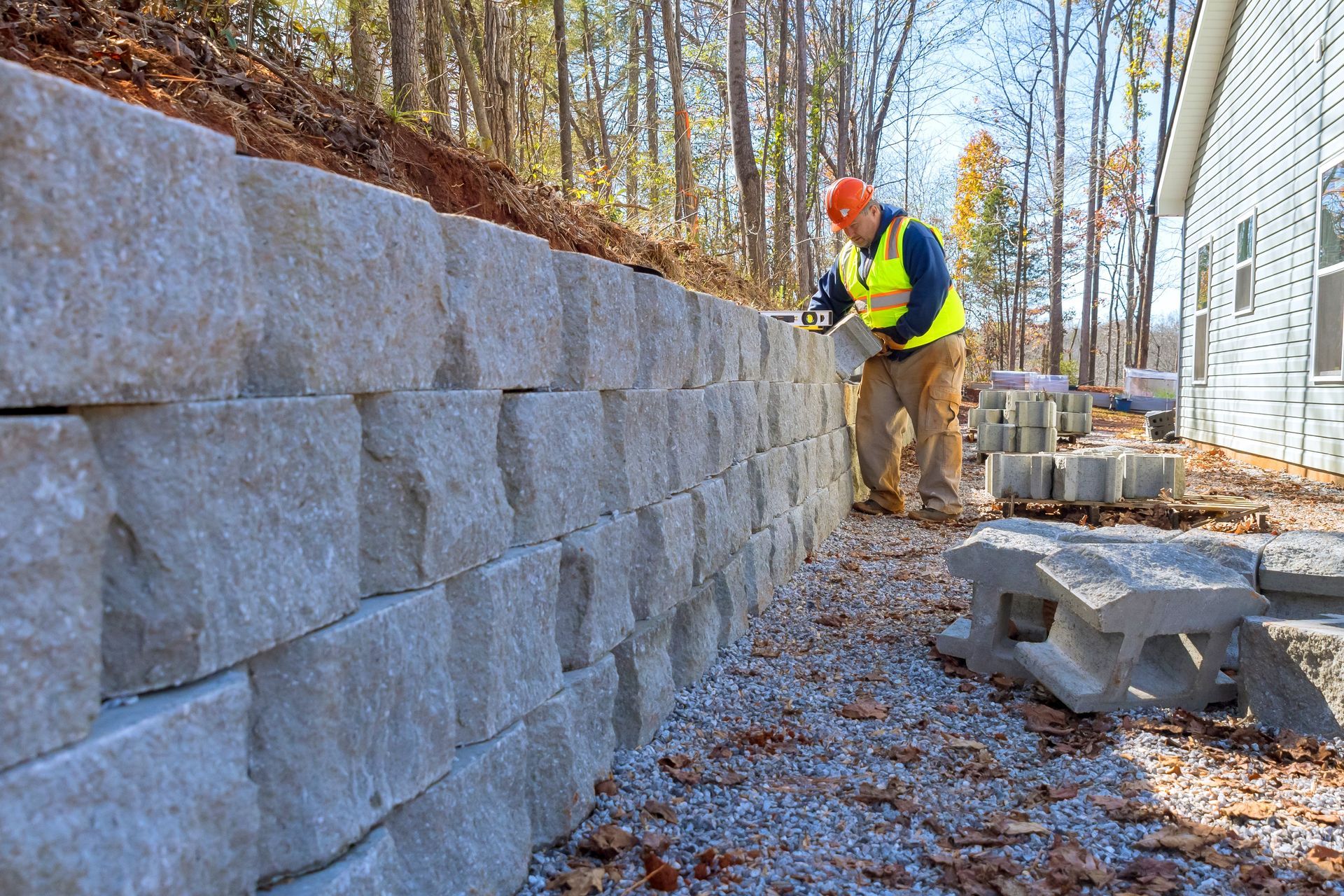
Prevent Erosion and Reclaim Your Yard
Retaining Walls in Greenville for sloped properties losing soil or missing usable outdoor space
Landscape Legends LLC builds retaining walls throughout Greenville and the surrounding areas for homeowners dealing with uneven terrain, soil migration, and yards that feel too steep to use comfortably. You might notice washouts after heavy rain, areas where grass struggles to grow because the ground slopes too sharply, or entire portions of your property that simply go unused because they tilt too much to set up furniture or play areas. A properly built retaining wall holds back soil, redirects water flow, and creates flat, stable zones where you can walk, plant, or sit without concern.
This service involves site assessment, material selection based on drainage and load requirements, and construction that accounts for the specific grade and soil conditions on your property. Walls are built using block, stone, or poured concrete depending on the height, visual goals, and engineering needs. Each installation includes a compacted base, drainage provisions behind the wall to prevent hydrostatic pressure, and proper backfill to ensure the structure stays in place through freeze-thaw cycles and storm runoff. The result is a permanent solution that prevents erosion, stops soil from sliding toward foundations or driveways, and opens up parts of your yard that were previously too steep to landscape or furnish.
If your property has elevation changes that limit how you use your outdoor space, reach out to discuss a retaining wall assessment in Greenville.
What Happens During Retaining Wall Construction
You begin with a site visit where the slope is measured, drainage patterns are noted, and wall placement is marked based on where the grade change occurs and where you need level ground. The excavation goes deep enough to establish a stable footing below the frost line, and the base material is compacted in lifts to prevent settling. Each course of block or stone is leveled and checked for alignment, and geogrid or reinforcement is added when wall height or soil type requires it.
Once the retaining wall is finished, you will see a clean, vertical face that holds back the slope and a new flat area in front of it that can support grass, gravel, pavers, or planting beds. Water no longer runs directly down the slope and across your lawn or driveway because drainage stone and weep holes redirect it safely through and away from the wall. Landscape Legends LLC designs each wall to match the scale of your property and the function you need, whether that means a low terrace border or a taller structure that creates an entirely new usable zone.
Larger walls may require engineered drawings and permitting depending on height and proximity to structures. Walls built without proper drainage or footings often lean, crack, or fail within a few years, so each element of the installation follows load and stability standards suited to local soil and weather conditions. This is not decorative edging; it is a structural element that must perform under pressure and moisture exposure over time.
Common Questions About Retaining Wall Projects
Homeowners in Greenville often want to understand material choices, timing, and how walls affect existing landscaping before moving forward.
What material works best for a retaining wall on sloped property?
Block systems offer modular strength and built-in drainage channels, natural stone provides irregular texture and blends into wooded or rural settings, and poured concrete works well for taller walls where engineering and smooth finishes are priorities.
How long does a retaining wall installation take?
Most residential walls are completed in two to five days depending on wall length, height, access for equipment, and whether steps or curves are included in the design.
Why do some retaining walls lean or crack after a few seasons?
Walls fail when the base is not compacted properly, drainage is inadequate, or the footer depth does not account for freeze-thaw movement in Greenville winters.
When should a retaining wall be built instead of regrading the slope?
You build a wall when the slope is too steep to hold mulch or grass, when erosion is active and visible, or when you need flat space quickly without moving large amounts of soil across the property.
What happens to plants or lawn areas near the wall during construction?
Excavation affects a zone several feet wide, so existing plants in that area are typically removed or relocated, and new landscaping is added after the wall is complete and backfilled.
If your yard loses soil with each storm or you avoid certain areas because the slope makes them unusable, contact Landscape Legends LLC to schedule a retaining wall consultation and review material options that suit your terrain and layout.